4444 Davidson Road, Hilliard, Ohio 43026


Noticing your breath isn’t quite what it used to be since starting treatment? You’re definitely not the only one, and it’s not something to feel embarrassed about bringing up. Bad breath during clear aligner treatment is a common experience, and it almost always comes down to a few fixable habits rather than anything more serious. At Spoonhower Orthodontics, we hear this concern often enough that we like to walk patients through exactly what’s happening and how to turn it around.
Why Can Aligners Make Breath Worse?
Clear aligners cover your teeth for most of the day, which changes the environment inside your mouth in a few small but meaningful ways. Saliva naturally helps rinse away bacteria and food particles throughout the day, but when an aligner is in place, that natural rinsing action is reduced. At the same time, trapped saliva and any leftover food particles have more direct contact with your teeth for longer stretches, creating conditions where odor-causing bacteria can build up.
The Most Common Causes
- Not cleaning the aligners themselves: Plaque and bacteria can build up on the tray just like they can on teeth, and an unclean aligner reintroduces odor every time it’s worn.
- Eating or drinking with aligners in: Food particles and sugary drinks trapped against the teeth for hours create the perfect environment for bad breath.
- Skipping brushing before putting aligners back in: Any bacteria or food left on the teeth gets sealed in against the enamel for extended periods.
- Dry mouth: Reduced saliva flow while wearing aligners can allow odor-causing bacteria to thrive more easily.
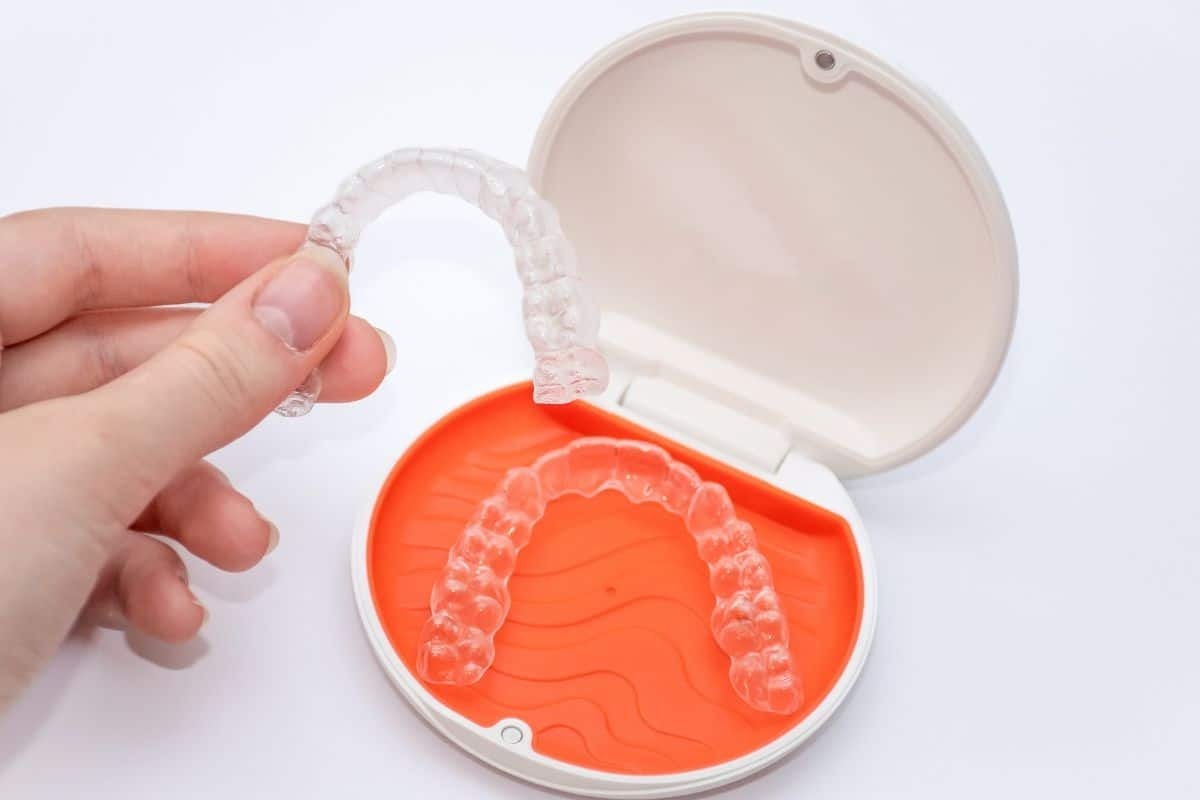
- Not cleaning the aligner case: A dirty case can transfer bacteria back onto a freshly cleaned aligner.
Simple Habits That Make a Big Difference
- Brush and floss thoroughly before placing your aligners back in after eating or drinking
- Clean your aligners daily using a gentle cleaning solution or clear, unscented soap, never toothpaste, which can be abrasive
- Rinse your aligners with lukewarm water every time you remove them
- Stay hydrated throughout the day to keep saliva flow steady
- Clean your aligner case regularly to avoid reintroducing bacteria
When Bad Breath Might Mean Something Else
In most cases, this is simply a hygiene routine issue that improves quickly once a few habits change. However, persistent bad breath that doesn’t respond to better cleaning could point to something else going on, like early gum irritation around the aligner edges. If you’ve adjusted your routine and things still aren’t improving, it’s worth having it checked. Feel free to contact us if you’re not sure whether what you’re experiencing is normal.
Freshen Up Your Aligner Routine With Us
Bad breath during clear aligner treatment is almost always fixable with a few simple adjustments to your daily routine. Dr. Spoonhower and our team are always happy to walk patients through the habits that make the biggest difference so treatment stays comfortable from start to finish. Serving patients throughout Hilliard, OH, we’re here to support you at every stage of your smile journey. Visit our dental office today if you have questions about keeping your treatment on track.
Frequently Asked Questions
Is bad breath normal during Invisalign treatment?
Yes, it’s a common experience, and it’s almost always tied to hygiene habits around the aligners rather than anything serious.
How often should I clean my aligners?
Aligners should be rinsed every time they’re removed and cleaned more thoroughly once a day with a gentle solution.
Can I use toothpaste to clean my aligners?
It’s best to avoid toothpaste, since it can be abrasive and may scratch the clear plastic, making it easier for bacteria to collect.
Should I be worried if bad breath doesn’t improve with better cleaning?
If persistent bad breath continues despite consistent hygiene, it’s worth getting checked in case something else, like gum irritation, is contributing to it.
Related Articles
Let’s Build You a Smile
You’ll Be Proud Of.